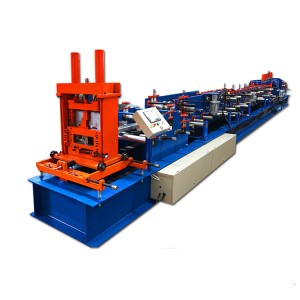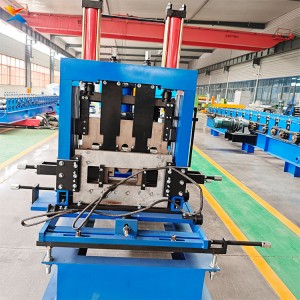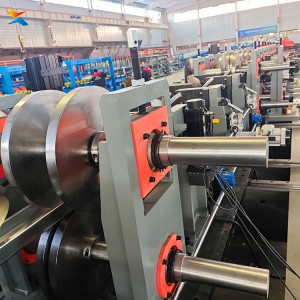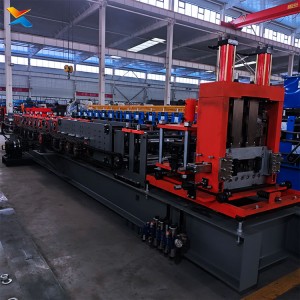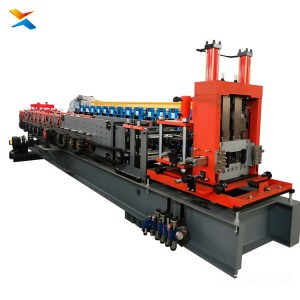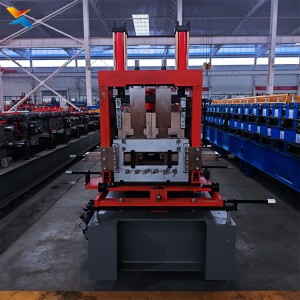

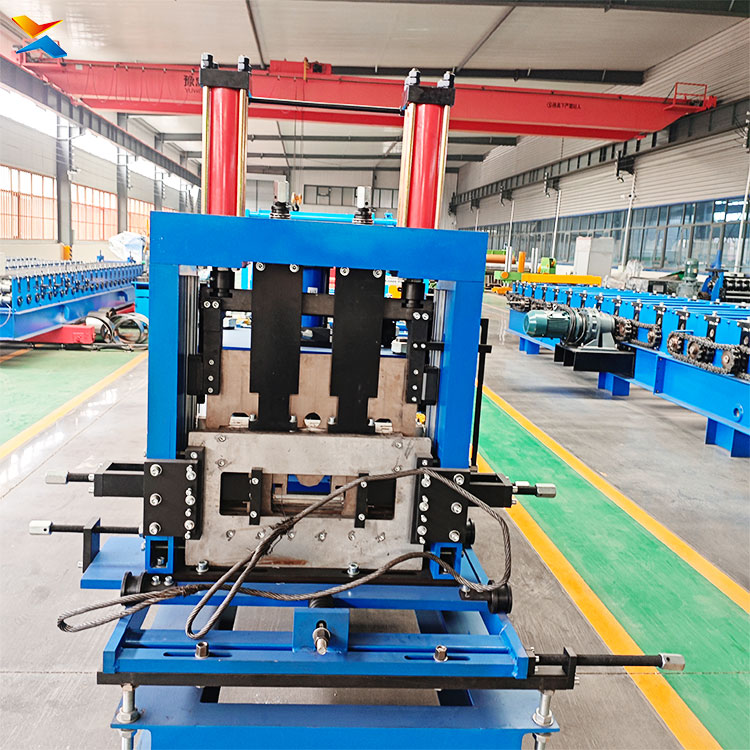
Light Steel C Channel Machine Product Description
The Light Steel C Channel Machine is a high-efficiency, cost-effective roll forming equipment specifically designed for the production of light steel C-shaped channel profiles. Widely applied in the light steel structure, prefabricated residential buildings, interior decoration, and small-scale construction industries, this machine integrates optimized roll forming technology, intelligent control, and stable operation, ensuring consistent product quality, high production efficiency, and perfect adaptability to light steel materials.
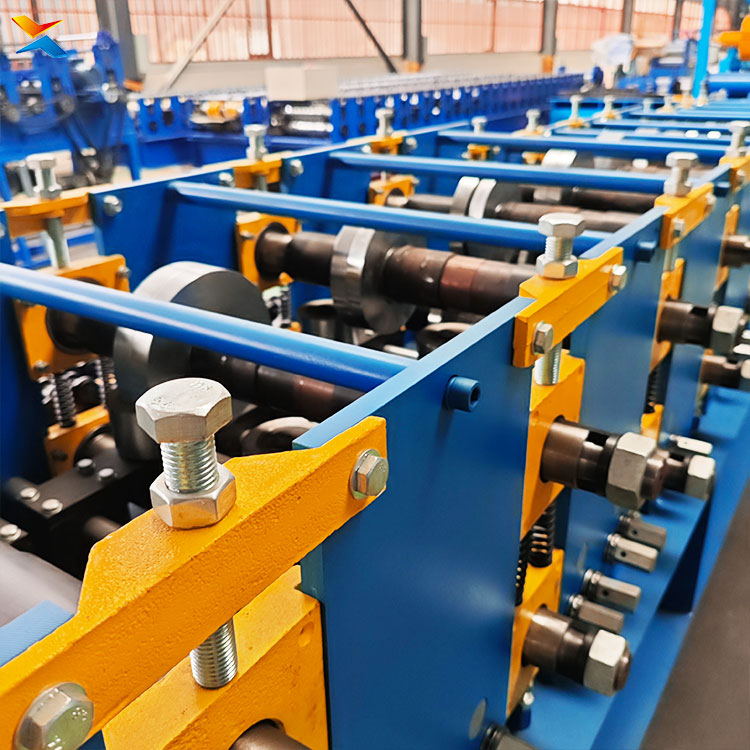
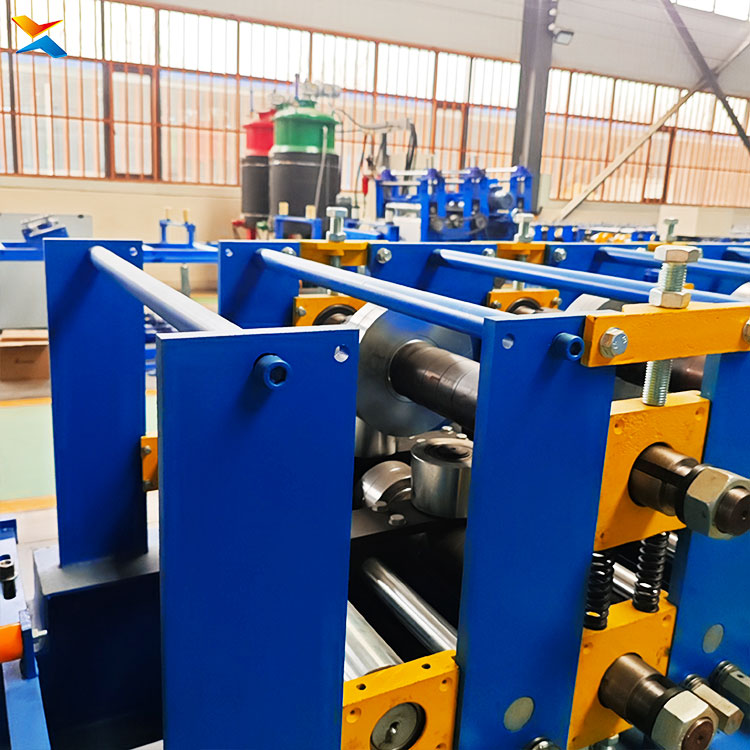
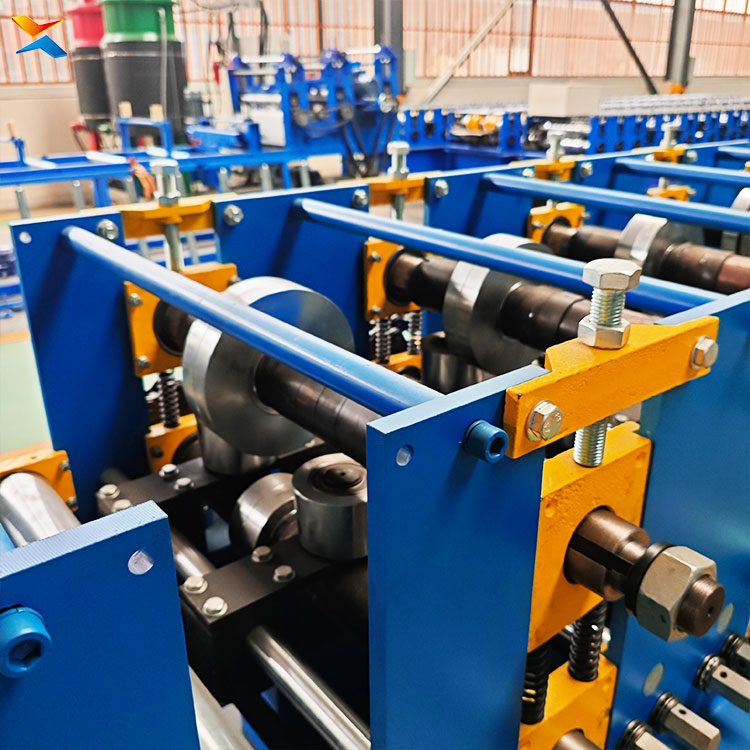
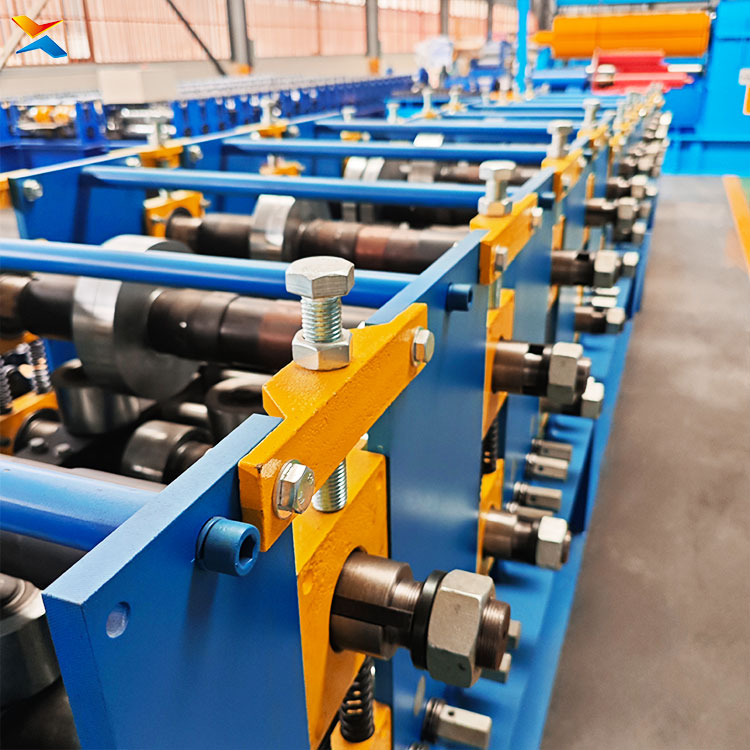
Equipped with a high-performance motor and precision gearbox, the Light Steel C Channel Machine features smooth transmission, low noise, and energy-saving performance, which effectively reduces operational costs while ensuring stable forming of light steel materials. The machine adopts a specialized multi-station roll forming structure, tailored to the characteristics of light steel (thin thickness, light weight), with each forming station scientifically designed to avoid material deformation or damage during the forming process. It ensures that the produced light steel C-channels have uniform cross-section, smooth surface, no wrinkles, and accurate dimensions—strictly complying with international and industry standards for light steel components.
The core advantage of this machine lies in its excellent adaptability to light steel materials and flexible operation. It is specially optimized for light steel coils (with thickness ranging from thin to medium), ensuring smooth feeding, stable forming, and no material waste. The machine can be flexibly adjusted according to different specifications of light steel C-channels (such as different widths, heights, and thin thicknesses), without the need for frequent mold replacement, greatly reducing production preparation time and labor costs, and improving production efficiency.
The feeding system of the Light Steel C Channel Machine is equipped with a high-efficiency leveling and guiding device, which can effectively correct the flatness of light steel raw materials (light steel coils), ensure stable and uniform feeding, and avoid defects such as surface scratches, edge warping, or dimensional deviation caused by uneven raw materials or feeding instability. This ensures the consistency and reliability of the final light steel C-channel products, meeting the installation requirements of light steel structures.
In terms of operation, the Light Steel C Channel Machine is equipped with an intelligent control system, featuring a user-friendly touch screen interface that allows operators to easily set and adjust parameters (such as forming speed, cutting length, and quantity), monitor the production process in real time, and quickly troubleshoot simple faults. The automatic cutting device adopts high-precision mechanical or hydraulic cutting, suitable for light steel materials, ensuring clean cutting edges, no burrs, and accurate length control—critical for the assembly accuracy of light steel C-channels in light steel structures, prefabricated houses, and interior decoration projects.
Made of high-quality steel and wear-resistant components, the machine has excellent durability and long service life, reducing the frequency of maintenance and repair, and ensuring long-term stable operation. It is also equipped with multiple safety protection devices (such as emergency stop buttons, protective covers, and overload protection) to ensure the safety of operators and the stable operation of the machine during long-term continuous production of light steel C-channels.
The light steel C-shaped channel profiles produced by this machine are widely used as key components in various light steel application scenarios, serving as wall beams, roof purlins, brackets, and connecting parts in light steel structure houses, prefabricated residential buildings, interior decoration frames, and small-scale construction projects. They have the characteristics of light weight, high strength, easy installation, corrosion resistance, and low cost, which can effectively reduce the overall weight of the structure, lower construction and material costs, and improve the construction efficiency and structural stability.
Whether for large-scale mass production of standard light steel C-channels or small-batch production of special-specification light steel C-channels, the Light Steel C Channel Machine can perfectly meet the production needs of customers. We provide professional technical support, including pre-sales material adaptation consultation, equipment debugging, and after-sales maintenance, to help customers improve production efficiency, reduce production costs, and achieve stable and efficient production of light steel C-channels.


♦ COMPANY PROFILE:
Hebei Xinnuo Roll Forming Machine Co., Ltd., not only produce different types of professional roll forming machines, but also develop intelligent automatic roll forming production lines, C&Z shape purline machines, highway guardrail roll forming machine lines, sandwich panel production lines, decking forming machines, light keel machines, shutter slat door forming machines, downpipe machines, gutter machines, etc.
Advantages of Roll Forming A Metal Part
There are several advantages of using roll forming for your projects:
- The roll forming process allows operations such as punching, notching, and welding to be performed in-line. Labor cost and time for secondary operations are reduced or eliminated, reducing part costs.
- Roll form tooling allows for a high degree of flexibility. A single set of roll form tools will make almost any length of the same cross-section. Multiple sets of tools for varying length parts are not required.
- It can provide better dimensional control than other competing metal forming processes.
- Repeatability is inherent in the process, allowing easier assembly of roll formed parts into your finished product, and minimizing problems due to “standard” tolerance build up.
- Roll forming is typically a higher speed process.
- Roll forming offers customers a superior surface finish. This makes roll forming an excellent option for decorative stainless steel parts or for parts requiring a finish such as anodizing or powder coating. Also, texture or pattern can be rolled into the surface during forming.
- Roll forming utilizes material more efficiently than other competing processes.
- Roll formed shapes can be developed with thinner walls than competing processes
Roll forming is a continuous process which converts sheet metal into an engineered shape using consecutive sets of mated rolls, each of which makes only incremental changes in the form. The sum of these small changes in form is a complex profile.